
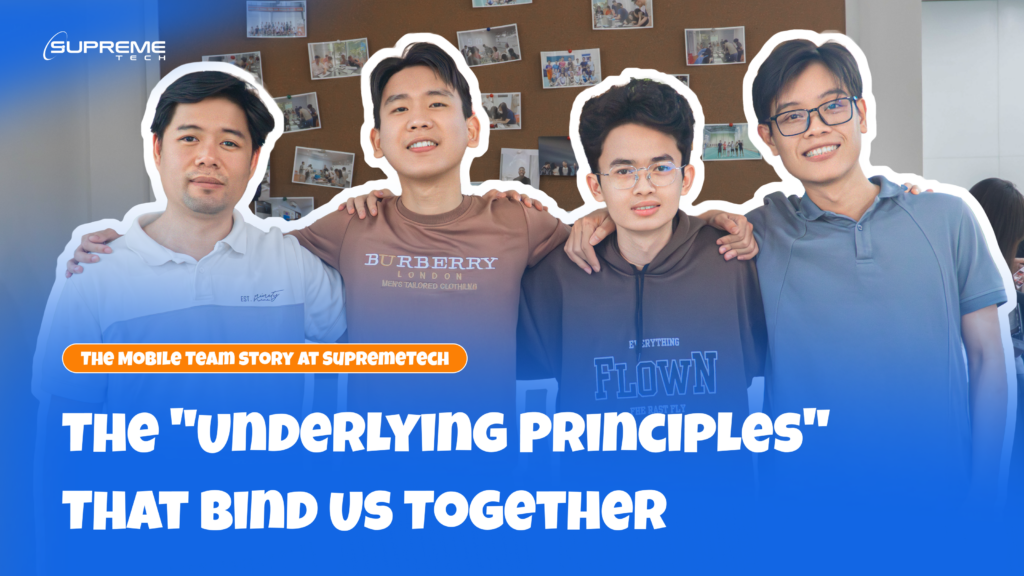
The Mobile Team story at SupremeTech: The “Unwritten Rules” that keep us bonded
29/01/2026

585
I’m not writing this to brag about achievements or to say SupremeTech is “perfect.” I just want to recount very human things: how the team treats one another every day, and why those specific things help us go the distance in an ever-changing industry.
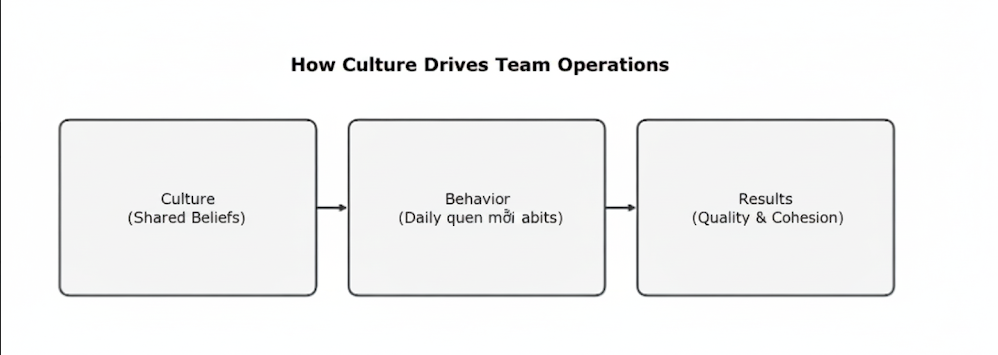
Why Culture and Technology areinseparable pillars in Our growth
People often say, “If you want to go fast, go alone; if you want to go far, go together.” But in the Mobile field, where technology changes by the hour and deadlines are always looming, going the distance together is truly not easy. We realized: clean code is important, but clean code doesn’t keep people around. What keeps us bonded is the feeling of trust, psychological safety during discussions, and a shared standard for quality.
Below are the 5 “unwritten rules” that the Mobile team at SupremeTech always keeps in mind. They might sound like regulations, but they are actually habits—repeated daily until they become culture.
1. No blaming, only clarifying the problem (No Blame Culture)
Bugs are inevitable. When an incident occurs—especially on Production—our first question is never “Who did this part?” but rather “Why did the system or process allow this error to slip through?”. Blaming only creates a defensive mindset and makes people afraid to tell the truth. When the whole team looks at the data together, reconstructs the timeline, and finds the root cause, things become much calmer.
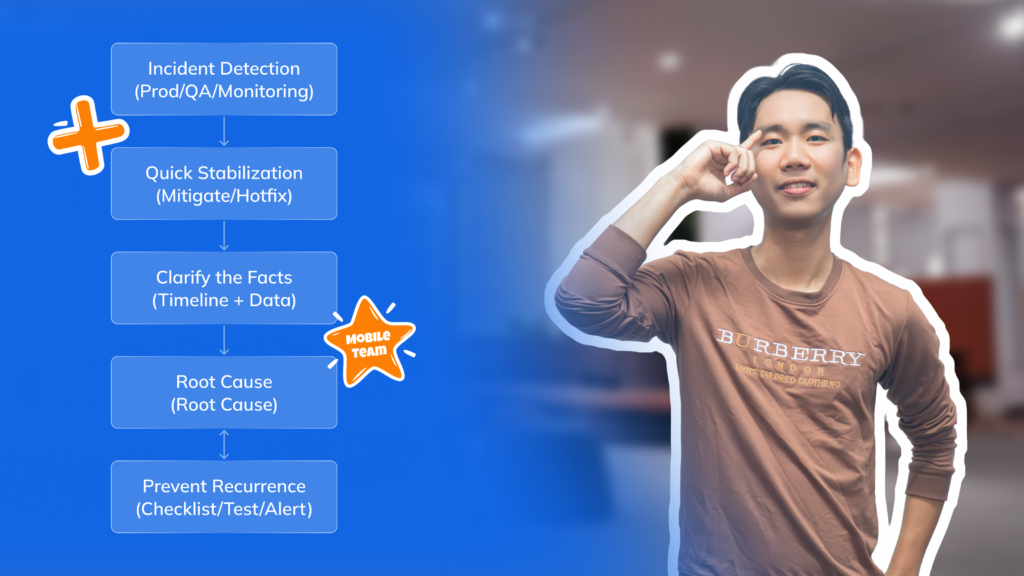
After things stabilize, we usually wrap up with very specific items: a new checklist for reviews, a missing test case, or an additional alert. The goal is that next time, no one has to be “paralyzed” by the exact same error in a different context.
2. Radical Candor (Honest but Respectful)
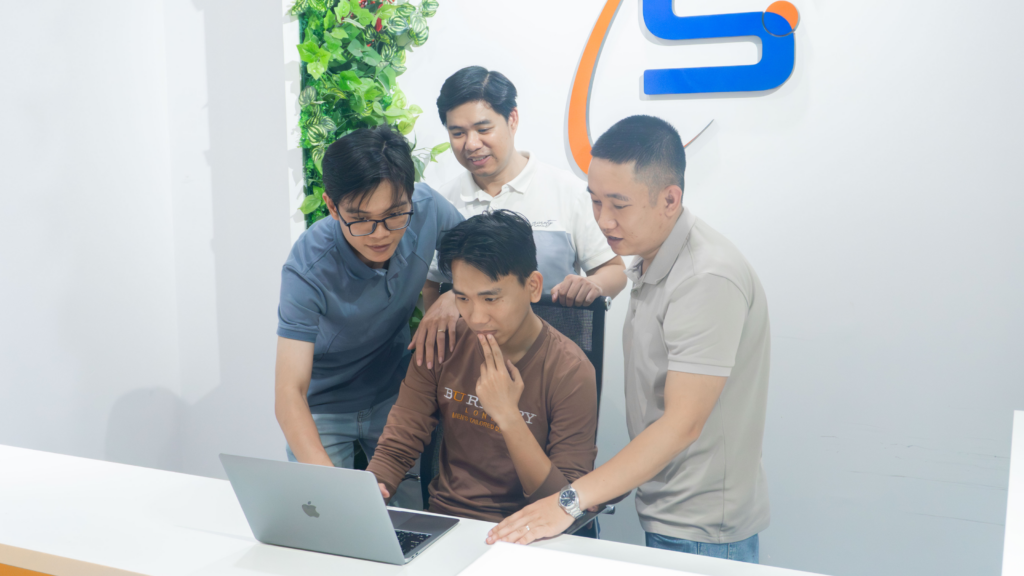
Code reviews or technical meetings at SupremeTech can sometimes get “heated.” There are times we speak bluntly: “This logic isn’t right,” “This design will be hard to scale,” or “This case hits the UX.” But the crucial point is: that frankness is aimed solely at the technical issue, not the person. The team views critical feedback as a form of respect—respect for the product, the users, and each other’s effort by not letting a ‘mediocre’ decision become technical debt later.
3. Extreme Ownership
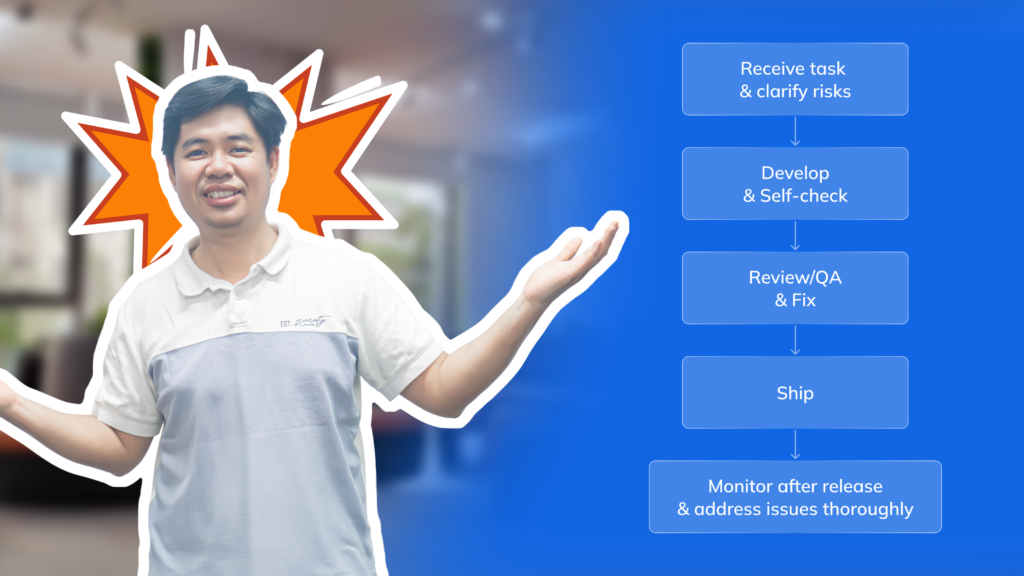
In the Mobile team, a feature isn’t called “Done” just because it’s merged. It’s only truly done when it runs stably in the user’s hands, creates no crashes/lag, and doesn’t drag along a trail of minor bugs. We avoid the “it’s a Backend error” or “QA didn’t test thoroughly” mindset. If the experience on the app is poor, it’s a Mobile team problem—because users don’t care where the error lies; they just see a ‘frustrating’ app.
4. No knowledge hoarding – Sharing is power
We care about the “bus factor”—the risk that if one person holds all the vital knowledge and then leaves or is busy, the whole team slows down. Therefore, there is a very natural habit within the team: share anything new you learn, write a brief summary after solving a difficult bug, and do a 10-15 minute demo for everyone to learn when you optimize something. Sharing doesn’t make anyone “lose their status”; on the contrary, it helps the whole team level up and prevents individuals from feeling like they are swimming alone.
5. Prioritizing quality and user experience (User-Centric)
We are Developers, but we try to think like Users: jittery animations, hard-to-press buttons, an extra half-second of loading—these are all things users feel immediately. There are times when deadlines are extremely tight, but the team still considers refactoring or redoing a part, because a bad experience will “eat” user trust faster than any bug. Quality here isn’t just “no crashes,” but also being smooth, clear, and consistent.

A moment where I saw “culture” most clearly
There was one time the team did a presentation to align on the approach for a critical part of the app. I prepared quite thoroughly and was a bit nervous, as presentations are when all weaknesses are clearly exposed. While I was presenting, people asked directly: “What if the network is weak?”, “If the user interacts rapidly and continuously, will the state get out of sync?”, and “Does this part cause the UX to stutter?”. No one said “this is wrong,” nor did anyone demand to know “who designed this.” The whole team focused solely on clarifying risks and finalizing actions: adding retry/backoff, clarifying loading states, adding test cases, and updating the review checklist.
Ending that session, what I remembered wasn’t whether the slides were beautiful, but the feeling that: you can be blunt and still be kind, and a good culture makes the whole team pull up the quality naturally without anyone having to “force” themselves to be the bad guy.
Conclusion
The Mobile team at SupremeTech is certainly not perfect—we still have bugs, we still have intense debates, and we still have nights where Slack stays lit up due to Production incidents. But it is these unwritten rules that help us maintain trust in one another and uphold our quality standards. To us, culture isn’t something hung on a wall; it lives in every review session, every reaction to a problem, and every decision to ‘do a little extra’ so the user is less frustrated.
Culture creates the team. The team creates a good product. And when people who trust each other enough look in the same direction, a good product is the inevitable result.